Why are we still losing trees on our highways and not counting the cost?
April 14 2026
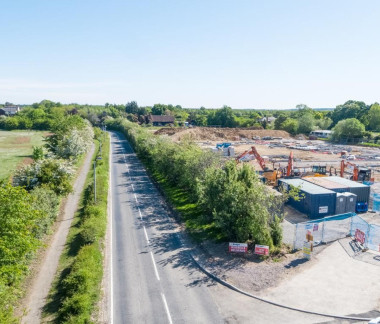
Over the past five years, the UK has seen the delivery of some of its largest highways schemes in decades. Alongside this has come a growing emphasis on sustainability, biodiversity net gain and the drive towards net zero. Yet there is an uncomfortable question sitting at the heart of all of this - why are we not properly recording the loss of large trees and established hedges on our road projects and what does it really mean for carbon emissions, writes Robert Wilkins at Ruskins the tree and soil specialists?
There is now an increasingly well-established case for the retention and relocation of large trees and established hedgerows as part of mainstream highways delivery. These are not experimental or niche techniques - they are proven processes that, when considered early in the planning stage, can allow significant natural assets to be preserved rather than removed. In doing so, they protect not only the visual and ecological character of a landscape, but also the substantial carbon already stored within mature vegetation.
As the industry moves towards net zero, the conversation must extend beyond replacement planting to include the preservation of what already exists. Incorporating tree and hedgerow relocation into highways planning offers a practical and achievable way to reduce environmental impact, avoid unnecessary carbon loss and create more sustainable outcomes. It is no longer a question of whether this can be done, but why it is not yet standard practice.
When you look closely at the available data, a stark picture begins to emerge. There is no single, reliable national dataset that tells us how many large trees have been removed as a result of highways work in the UK. No year-on-year reporting. No clear distinction between saplings and established trees. No consistent tracking of outcomes. What we do have, however, is a mass of fragmented evidence – and it is damning in terms of environmental damage.
The A14 Cambridge to Huntingdon scheme alone saw the clearance of around 400,000 trees and shrubs. That is not an abstract number. That is landscape-scale removal, including established vegetation that had taken decades to grow.
Across other major schemes, partial data suggests that hundreds of thousands more trees have been affected. When you begin to piece this together, it becomes clear that over the past five years, the true number of trees lost across the strategic road network is likely to run into the hundreds of thousands - potentially far higher - and yet, we do not track it properly. At a time when the construction industry is under intense pressure to demonstrate its environmental credentials, this lack of transparency is difficult to justify.
The carbon reality of mature trees
According to the Woodland Trust, a single large tree can absorb up to 150kg of carbon dioxide per year. But more importantly, it already stores decades’ worth of carbon within its structure and root system. When that tree is removed, that stored carbon is effectively lost. The idea that this can be offset by planting new saplings is, at best, optimistic.
Because a newly planted tree does not begin to replicate that carbon function for decades. So, when we remove established trees at scale, we are not just changing the landscape - we are creating a carbon deficit that cannot be quickly recovered.
The standard response to tree removal is mitigation planting. For every tree removed, more are planted. On paper, this appears positive. In reality, the outcomes are far less convincing.
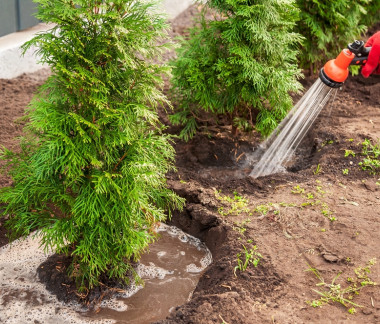
On the A14 scheme, approximately 850,000 trees were planted. Within a few years, around 70–75%++ of those trees had died. As trees are provided to a set standard, it is from the moment they are delivered to site, how the species are selected, stored, handled, planted and then cared for causes nearly 100% of these failures.
Across multiple highways projects between 2018 and 2023, more than 400,000 newly planted trees are reported to have died. Average failure rates sit around 30%, with some sites significantly higher. This raises a fundamental question - if the majority of mitigation planting fails, can it really be considered mitigation?
More recently, there are signs of improvement, with some schemes reporting survival rates closer to 90%. But this is not yet consistent and the underlying issue remains. We are measuring success by how many trees are planted and not how many survive.
The missing link - soil
The failure of newly planted trees is often attributed to weather conditions, maintenance or species selection. These factors matter, but soil also very important, it is the nature within healthy soil that supports plants. If this does not exist odds are stacked versus new planting establishing.
Construction activity strips soil of its structure and biology. It becomes compacted, disturbed and in many cases, effectively lifeless. Topsoil stored in heaps, harms the Soil Biology within. Trees planted into these conditions are expected to establish and thrive, but the environment they are placed into is fundamentally unsuitable.
The Arboricultural Association has repeatedly highlighted soil compaction as a leading cause of tree failure in urban environments. Without healthy soil biology, root systems cannot function properly. Water does not move as it should. Nutrient uptake is limited. In these conditions, failure is not surprising - it is inevitable.
What makes this situation more frustrating is that, in many cases, alternatives exist. Mature trees and established hedgerows do not always need to be removed. With the right planning and expertise, they can often be retained or even relocated.
At Ruskins, we have seen first-hand how large trees can be successfully transplanted or integrated into new developments. It requires early engagement, careful handling and a willingness to design around natural assets rather than removing them.
The carbon argument alone is compelling. Retaining an existing large tree preserves decades of stored carbon and avoids the need for replacement planting that may or may not succeed. It is not always possible, but it is far more achievable than current practice suggests. Carbon within trees can be calculated.
A question of priorities
The current state of many highways landscapes reflects the priorities given to them. Tree removal is often treated as a necessary step in enabling construction. Planting is treated as a box to be ticked at the end of the process. Soil is rarely considered as a critical component and this approach is no longer fit for purpose.
If we are serious about net zero, we need to move beyond headline numbers and start looking at outcomes by asking - how many large trees are being lost each year? How much carbon is being removed from the landscape and how many replacement trees are actually surviving? At present, we cannot answer these questions with confidence.
The highways sector is evolving. There is greater awareness of environmental impact, stronger policy frameworks and a genuine desire to improve, but there is also a gap between intent and delivery. Planting millions of trees sounds positive. Losing a significant proportion of them does not.
Continuing to remove large trees without fully accounting for their carbon value also undermines the very goals the industry is trying to achieve. This is not about criticising individual projects. It is about recognising a systemic issue and addressing it.
If we are to align highways development with net zero objectives, a change in approach is needed. We need to prioritise the retention of existing trees wherever possible. We need to treat soil as a critical asset, not an afterthought. And we need to measure success based on long-term outcomes, not short-term activity.
This means - designing schemes that work with existing landscapes rather than replacing them. Investing in soil health to support successful planting and tracking tree loss and survival with the same rigour applied to other metrics. Most importantly, it means asking difficult questions.
The UK is investing heavily in its highways infrastructure. At the same time, it is committing to ambitious environmental targets. These two objectives do not have to be in conflict, but they will be, unless we change how we approach the natural environment within our schemes.
Right now, we are removing hundreds of thousands of large trees, planting replacements that often fail and not fully accounting for the consequences. That is not sustainable and it is not compatible with net zero. The question therefore, is no longer whether we can do better. It is why we are not already doing it.

Call us on 01277 849990
or request a call back
Please note that in most cases we can provide a outline quotation by telephone, that will be confirmed during a site visit.