Retaining large trees within developments
May 22 2026
In many areas of development, large trees are often seen as a constraint. They occupy space, influence layouts and can complicate construction programmes. However, increasingly, planners, local authorities and communities are recognising that these trees are not obstacles to be worked around, but assets to be protected and integrated writes, writes Aaron Morley at Ruskins, the tree and soil specialists.
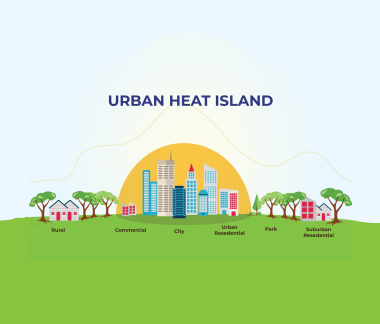
Across the UK, this change is being reinforced through planning policy and environmental strategy. The Government’s 25 Year Environment Plan highlights the importance of protecting and enhancing natural assets within urban environments, while local planning authorities routinely apply Tree Preservation Orders (TPOs) to safeguard significant trees. According to the Woodland Trust, large trees can absorb up to 150kg of carbon dioxide per year, while also reducing urban heat, improving air quality and supporting biodiversity. In simple terms, once a large tree is lost, it cannot be replaced within a meaningful timeframe.
Currently there is a myopia that focuses on planting new tiny trees, that do no heavy lifting in the climate emergency for at least 20-30 years, whilst not protecting the mature ones, that are doing the work.
For developers, this presents both a challenge and an opportunity. The challenge lies in delivering schemes within tight constraints. The opportunity is in creating environments that are demonstrably greener, more attractive and ultimately more valuable.
At Ruskins, we work with developers, contractors and consultants to show that retaining mature trees is not only possible, but often the most practical and commercially sensible option when approached correctly.
Understanding the Real Constraint
The starting point is understanding that it is rarely the tree itself that creates the issue, but its root protection zone (RPZ). Defined under BS5837, the RPZ is the area around a tree that must be protected to ensure its long-term health. Traditionally, this has been treated as a “no-go” zone, limiting design flexibility and often leading to decisions to remove or transplant trees.
However, advances in arboricultural techniques and soil science mean that this binary approach is no longer necessary. With the right methodology, it is possible to work within and around RPZs without causing long-term damage.
One of the most common conflicts arises when underground services need to pass through areas occupied by tree roots. Conventional excavation methods can sever roots, destabilise trees and lead to long-term decline.
There is an alternative approach that allows services to be installed through root systems while leaving roots intact. Using specialist techniques such as trenchless installation and careful root mapping, it is possible to route services in a way that avoids damage altogether. This not only protects the tree, but also reduces the risk of future structural or maintenance issues.
Construction close to existing trees requires a more nuanced approach. Where works encroach into the RPZ, controlled root management can be undertaken using air spade technology, subject to approval by the local Tree Officer.
Air Spades use compressed air to expose roots without cutting them, allowing for precise assessment and selective pruning where necessary. This enables contractors to reduce back root systems in a controlled manner and adapt foundation or level designs accordingly. In many cases, this opens up areas of a site that would otherwise be considered unusable.
Once roots are exposed and understood, a range of solutions can be introduced to accommodate level changes or structural requirements, ensuring both the tree and the development can coexist.
Improving Tree Resilience
Construction activity inevitably places stress on trees. Changes in ground conditions, reduced water availability and soil disturbance can all impact tree health, even when protection measures are in place.
In addition to standard BS5837 protection, Ruskins focuses on improving the resilience of retained trees. This involves enhancing soil biology and supporting the natural processes that sustain root systems. Healthy soil is not simply a medium for growth; it is a living ecosystem that plays a critical role in nutrient uptake, water retention and overall tree vitality.
By introducing beneficial microorganisms and improving soil conditions, we can help trees better withstand the pressures of construction and adapt to their new environment once the project is complete.
This is because one of the most overlooked issues in construction is soil compaction. Heavy machinery, repeated foot traffic and material storage can compress soil around root systems, restricting oxygen and water movement.
The Arboricultural Association notes that compacted soils are a leading cause of tree decline in urban environments. Even where trees appear unaffected initially, long-term damage can manifest months or years later.
Ruskins addresses this through specialist decompaction and aeration techniques. By breaking up compacted soil and reintroducing organic matter and soil biology, we can restore the conditions needed for healthy root function. This is particularly important on sites where compaction has occurred inadvertently during early stages of construction.
Access requirements often present a major challenge when working around trees. Traditional road construction methods can damage root systems and alter soil conditions irreversibly.
No-dig construction provides a proven alternative. By using cellular confinement systems and carefully designed load distribution layers, it is possible to install access routes over root protection areas without excavation. This preserves the integrity of the soil and root system beneath, while still providing the structural performance required for vehicles and plant.
For developers, this approach can unlock site access without compromising tree retention, avoiding costly redesigns or delays.
A Different Way of Thinking
Retaining large trees requires a change in mindset. It is not about working around constraints, but about integrating natural features into the design process from the outset.
This means early engagement between arboriculturists, designers and contractors. It means understanding what is possible before decisions are made. And it means recognising that trees are not just environmental assets, but also contribute to placemaking, wellbeing and long-term value.
Research from the Forestry Commission has shown that access to green infrastructure can increase property values and improve occupant satisfaction. In urban developments, large trees play a central role in delivering that value.
However, there is a perception that retaining trees is more complex and therefore more expensive. In some cases, there are additional considerations, but this is often offset by reduced costs elsewhere. Avoiding tree removal can eliminate the need for compensatory planting, reduce planning risk and improve the overall marketability of a development.
More importantly, it can prevent the long-term liabilities associated with tree failure or decline caused by poor construction practices.
The techniques now exist to make this not only achievable, but practical. From installing services without damaging roots, to improving soil health and designing no-dig solutions, there are clear, proven ways to build alongside trees successfully.
At Ruskins, our role is to bring these approaches together in a way that works for both the tree and the development. Because in the end, the best projects are not those that remove constraints, but those that work intelligently with them.
Call us on 01277 849990
or request a call back
Please note that in most cases we can provide a outline quotation by telephone, that will be confirmed during a site visit.