Why moving large trees can be a smart investment
March 30 2026
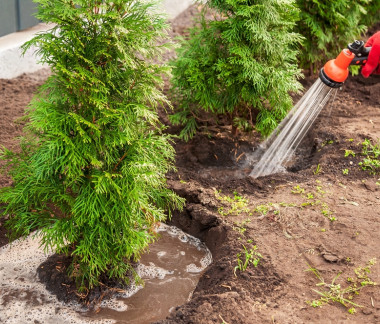
When people picture tree planting, they usually imagine a small sapling tied to a stake. It’s a familiar symbol of environmental action across parks, housing developments and roadside verges. But behind this image hides a powerful alternative – one that is frequently overlooked – the opportunity instead, of moving large trees, writes Aaron Morley at Ruskins the soil and tree specialists.
With modern equipment and careful planning, transplanting large trees is no longer an ambitious idea, but a practical solution, one that can deliver environmental, financial and ecological benefits that newly planted saplings may take decades to deliver. For developers, planners and land managers, it can also be a much smarter investment.
One of the most immediate benefits is cost. Large, established trees are expensive to purchase and install. The process of sourcing specimens, transporting them from nurseries and planting them safely can quickly escalate overheads, particularly when the aim is to create an instant mature landscape.
By contrast, trees that already exist on a development site can often be relocated using specialised tree spades and lifting equipment. When handled by experienced operators, this process can be relatively straightforward and significantly more economical. In many situations, transplanting an existing large tree can cost a fraction of buying and planting a new tree of comparable size, when moved with a Tree Spade - sometimes up to 90% less. It is one of those rare cases where the environmentally responsible option also happens to make financial sense.
Unlocking development sites while keeping their character
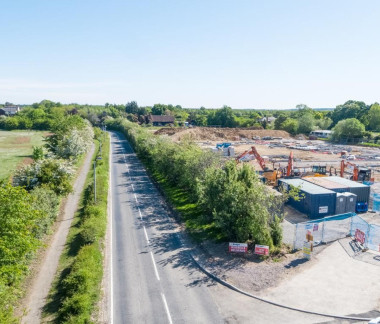
Development sites frequently contain trees that create complications during planning. These trees may sit in the footprint of proposed buildings/gardens, access roads or service routes. Traditionally, this would often lead to their removal. Transplanting offers an alternative.
Rather than losing valuable trees, they can be carefully relocated elsewhere on the site, perhaps to the perimeter, along boundaries, or within new green spaces. This approach allows development to proceed while still retaining many of the environmental benefits that the original trees provided.
From a planning perspective, this can also demonstrate a clear commitment to environmental stewardship. Large trees carry far more ecological value than newly planted saplings and retaining them in some form can strengthen the environmental credentials of a project. In some cases, transplanting can even help unlock sites that might otherwise face planning challenges due to existing tree constraints.
This is because there is growing public awareness of the role trees play in tackling climate change and supporting biodiversity. Across towns and cities, tree planting initiatives are becoming increasingly common. However, one important fact is often overlooked - young trees take decades to deliver meaningful environmental benefits.
A newly planted sapling will contribute very little in terms of carbon storage, shade, cooling or habitat during its early years. In many cases, it may take 20 to 30 years before it begins to make a significant environmental contribution. Mature trees, on the other hand, are already performing these roles. They store larger amounts of carbon, intercept rainfall, provide shade and cooling and support complex ecosystems of insects, birds and other wildlife. In other words, large trees are doing the heavy lifting.
By transplanting large trees rather than replacing them with young ones, those environmental benefits continue without interruption. From a sustainability perspective, that continuity matters.
Working with ecology rather than against it
Another advantage of transplanting is the flexibility it provides when addressing ecological considerations. Development sites often contain hedgerows, trees or vegetation that support protected species or important habitats. Instead of removing these features entirely, sections can sometimes be relocated in ways that maintain or even improve their ecological value.
Hedgerows, for example, can be transplanted and reoriented so they receive more sunlight, which benefits basking insects and other wildlife. Sections of hedgerow can be moved to create stronger habitat links between green spaces, allowing wildlife to move more easily. When linking isolated habitats, this will massively benefit wildlife.
Similarly, moving certain trees or hedges may help redirect wildlife activity away from areas where development will take place. This can be particularly useful when dealing with species that rely on established vegetation for shelter or movement. The aim is not simply to preserve isolated elements, but to strengthen the overall ecological network.
In many communities, trees and hedges contribute strongly to the character of streets and landscapes. When these features are removed, the change can be noticeable and sometimes unpopular. Transplanting can help retain that familiar character.
For example, hedgerows that need to be cleared to create better road visibility, do not always have to be lost entirely. Sections can often be relocated to either create the visibility display or to add to the site boundary, preserving the visual continuity of the street scene while still meeting safety requirements. It’s a small detail, but one that can make a big difference to how new developments feel within their surroundings.
Planning considerations and biodiversity requirements
Environmental regulations and biodiversity policies are also playing an increasingly important role in development planning, which aligns with broader biodiversity objectives, which increasingly focus on preserving existing ecological value wherever possible, rather than replacing it later with mitigation planting.
However, perhaps the most compelling argument for transplanting large trees is simply that it gives them a second life. Trees that might otherwise be felled because they stand in the wrong location can instead become valuable features elsewhere on a site. They might provide screening for new developments, shade in public spaces, or structure within new landscape designs. Rather than losing decades of natural growth, that investment of time and nature is preserved.
Specialist contractors such as Ruskins with experience in soil management, tree handling and transplanting techniques play a key role in making these operations successful. Careful preparation, appropriate equipment and an understanding of soil conditions all contribute to high survival rates when moving mature trees. For companies like ours working closely with trees and soils, transplanting has become an increasingly important part of how development sites are managed responsibly.
Despite its advantages, transplanting large trees is still relatively unknown outside professional landscaping and arboricultural circles. Many people assume that once a tree is in the ground, it cannot be moved.
The reality is quite different. With the right equipment and expertise, many trees and hedges can be relocated successfully, allowing developments to progress while preserving valuable environmental assets.
At a time when climate change, biodiversity loss and sustainable development are all pressing concerns, solutions that balance progress with environmental responsibility are more important than ever. Sometimes, that solution is not planting a new tree - it’s simply moving the one that’s already there.

Call us on 01277 849990
or request a call back
Please note that in most cases we can provide a outline quotation by telephone, that will be confirmed during a site visit.