Why trees could be the most valuable asset in your biodiversity net gain strategy
September 02 2026
Since Biodiversity Net Gain (BNG) became mandatory for most major developments in England, the conversation surrounding trees has changed significantly. For many years, trees were often viewed primarily as a planning consideration to be retained where possible or replaced when necessary. Today, they are increasingly recognised as one of the most valuable natural assets on a development site, contributing not only to landscape quality, but also to biodiversity, climate resilience and the long-term environmental value of a scheme, writes Robert Wilkins at Ruskins, the tree and soil specialists.
The introduction of mandatory Biodiversity Net Gain through the Environment Act 2021 has accelerated this change in thinking. Developers are now required to demonstrate that completed developments will leave biodiversity in a measurably better state than before construction began, delivering at least a 10% increase in biodiversity value that must be maintained for a minimum of 30 years.
This requirement has fundamentally altered the way development sites are assessed and designed, placing far greater emphasis on the protection and enhancement of existing natural assets. As a result, trees have moved from being viewed simply as landscape features to becoming important components within wider biodiversity strategies.
Biodiversity Net Gain Is About More Than Planting Trees
One of the biggest misconceptions surrounding Biodiversity Net Gain is that developers can simply remove existing vegetation and compensate by planting new trees elsewhere. The reality is considerably more complex.
BNG is based on the principle that existing habitats possess measurable ecological value which cannot always be replicated by replacing them with newly planted specimens. Mature trees provide a level of biodiversity that takes decades and sometimes centuries, to develop. Their canopies support birds, insects, lichens and fungi, while their root systems contribute to soil health, water regulation and carbon storage in ways that newly planted trees simply cannot achieve.
Natural England's Biodiversity Metric recognises these differences by assigning greater ecological value to established habitats than to newly created ones. This means that retaining mature trees wherever possible often delivers significantly greater biodiversity benefits than removing them and relying solely on replacement planting.
For developers, this creates a compelling commercial argument. Protecting valuable trees from the outset can simplify Biodiversity Net Gain calculations, reduce the need for off-site biodiversity units and make it easier to achieve planning approval.
Trees Are Becoming Part of the Design Process
All this means that the introduction of mandatory BNG has encouraged project teams to involve arboricultural and ecological specialists much earlier in the development process.
Rather than designing a scheme and asking whether trees can be retained afterwards, many successful projects now begin by identifying the site's most valuable ecological assets before layouts are prepared. This approach often produces better developments.
Existing tree groups help define streets, create attractive public spaces, improve microclimates and provide instant maturity that new landscaping cannot replicate for many years. Well-integrated trees also contribute to cooling urban environments, improving air quality and reducing surface water runoff, benefits that increasingly align with wider sustainability objectives.
The result is that trees are no longer simply protected because planning policy requires it. Increasingly, they are retained because they make developments more valuable, more attractive and easier to deliver within today's environmental planning framework.
Can Tree Translocation Support Biodiversity Net Gain?
However, one question increasingly asked by developers is whether tree translocation can contribute towards Biodiversity Net Gain objectives. The answer depends on the circumstances.
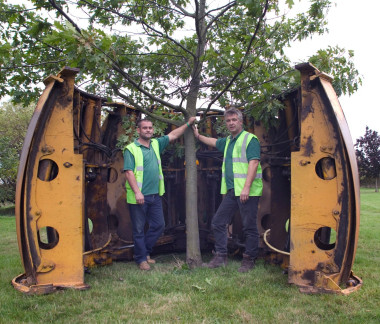
Tree translocation involves carefully relocating existing trees from one part of a site to another or, in some cases, to an entirely different location. When undertaken correctly, it can preserve valuable trees that might otherwise be lost to development while maintaining some of the ecological benefits they provide.
That said, translocation is not simply a case of lifting a tree and planting it elsewhere. Success depends on factors including the species, age, health and size of the tree, together with soil conditions, timing and long-term aftercare. Even under favourable conditions, not every tree is suitable for relocation and survival cannot be guaranteed.
Within the Biodiversity Metric, translocated habitats are assessed according to specific rules and are generally treated differently from habitats that remain undisturbed. While translocation can form part of a wider biodiversity strategy, it should not automatically be viewed as a direct substitute for retaining high-value habitats in their original location.
Where appropriate, however, carefully planned tree translocation can help developers preserve important landscape features, reduce habitat loss and support wider environmental objectives while maintaining flexibility within site layouts.
Healthy Soils Are Equally Important
Although Biodiversity Net Gain often focuses attention on habitats above ground, the ecological value of healthy soils should never be overlooked. Trees rely upon complex soil ecosystems that support root development, water infiltration and nutrient cycling. A large tree growing within degraded or compacted soil will struggle to provide the environmental benefits expected of it, regardless of how carefully it has been retained.
Healthy soils also support an extraordinary diversity of microorganisms, fungi and invertebrates that underpin the wider ecological network across development sites. Improving soil biology not only benefits retained and newly planted trees, but also enhances biodiversity across landscaped areas, public open spaces and sustainable drainage features.
As Biodiversity Net Gain matures, greater recognition is likely to be given to the relationship between soils, trees and long-term habitat quality. This is because there was a time when environmental enhancements were often regarded as additional costs associated with planning permission. That position has changed.
Today, Biodiversity Net Gain has become an integral part of development viability. Developers who understand ecological constraints early can make better-informed design decisions, reduce planning risk and minimise the need for costly off-site biodiversity units.
At the same time, investors, local authorities and purchasers are placing greater value on developments that demonstrate strong environmental performance. Attractive, tree-rich developments are increasingly associated with higher-quality placemaking, improved wellbeing and greater resilience to climate change. Trees therefore deliver benefits that extend well beyond biodiversity calculations alone.
We can see therefore, that biodiversity Net Gain should never be viewed simply as another planning obligation to satisfy. Instead, it offers an opportunity to rethink how development interacts with the natural environment.
Trees already provide many of the environmental outcomes that modern planning seeks to encourage, including carbon storage, habitat creation, flood mitigation, urban cooling and improved public health. By recognising their value early in the design process, developers can create schemes that satisfy regulatory requirements while delivering places that are more attractive, more resilient and ultimately more valuable.

Call us on 01277 849990
or request a call back
Please note that in most cases we can provide a outline quotation by telephone, that will be confirmed during a site visit.